The tidewater glaciers of Kenai Fjords
Above Kenai Fjords National Park lies the Harding Icefield, and its glaciers spill toward the sea on every side. A handful still reach salt water, and those tidewater glaciers are what the longer cruises from Seward come to see. Which ones you reach depends on the route you book.
An icefield on top of the park
The Harding Icefield covers about 700 square miles (1,800 km²) of the Kenai Mountains, and nearly 40 glaciers flow out of it. More than half of Kenai Fjords National Park, which covers more than 600,000 acres, lies under that ice. Protected first as a monument in 1978, it was made a national park two years later, in 1980.
The fjords themselves are valleys carved by glaciers and later flooded as the coast sank, which is why the cliffs drop so steeply into deep water. From a boat you see the story in layers, with ice on the ridges and green forest down by the water, and between them a band of bare rock where glaciers have pulled back.
What makes a glacier tidewater
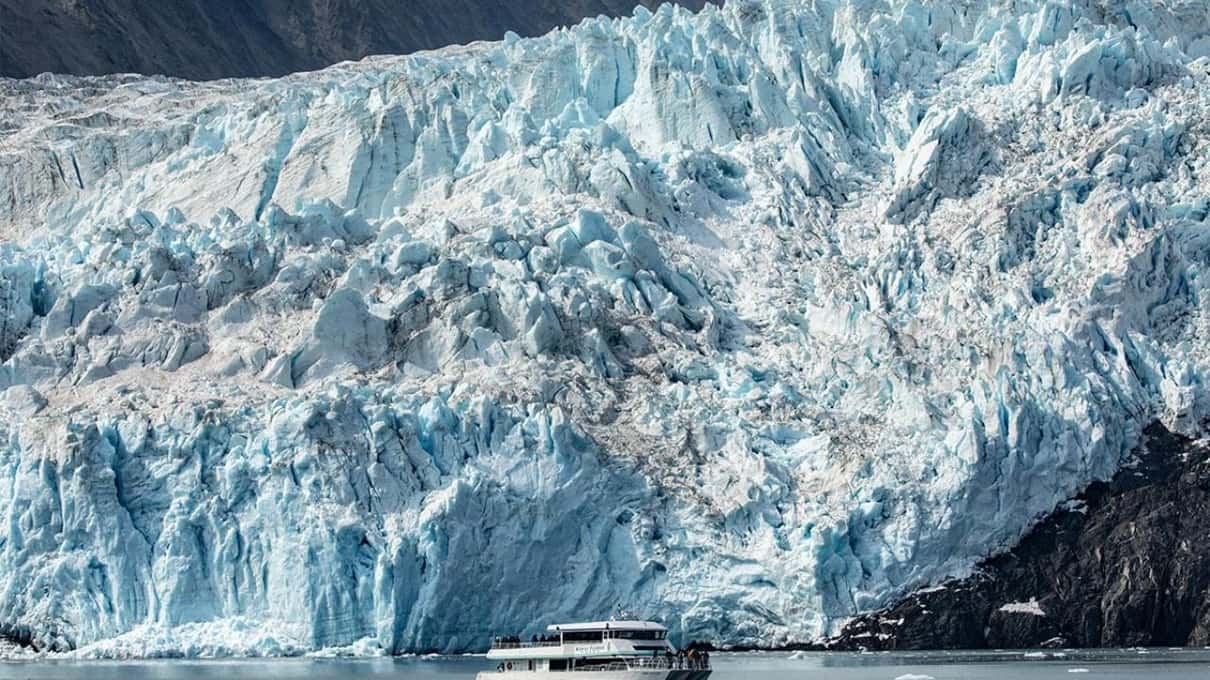
A tidewater glacier ends in the sea. The water undercuts its face, and blocks of ice break away and crash down, a process called calving. You often hear it before you see it. First comes a sharp crack and then a low boom that rolls around the fjord, and a big piece sends small waves toward the boat a little later. No one can time it, and some visits bring several falls while others see none.
Boats keep a safe distance from the face, and captains judge it on the day from the ice in the water and the size of recent falls. Once the engines go quiet, the crew may fish a chunk of glacier ice out of the water for passengers to hold, as one Viator reviewer describes. Tidewater glaciers also advance and retreat in long natural rhythms, the tidewater glacier cycle, on top of the overall warming that has shrunk most glaciers in the park.
Which cruise reaches which glacier
| Tour | From | Hours | Glaciers |
|---|---|---|---|
| Resurrection Bay half day | ~$150 | About 4 | Bear Glacier from the bay, no tidewater face |
| Kenai Fjords Tours 6-hour | ~$230 | 6 | One tidewater glacier |
| Major Marine 6-hour | ~$287 | 6 | Holgate Glacier |
| Captain's Choice | ~$255 | 7 | Aialik or Holgate, chosen on the day |
| Major Marine full day | ~$319 | 7.5 | Two tidewater glacier stops in Aialik Bay |
| Northwestern Fjord | ~$288 | 8 | Three tidewater glaciers in one fjord |
Any of these plans can change on the water, because a high swell can lead the captain to alter or cut short the route. Our route-length guide compares the hours and the open-water stretches, and the price guide works out what each boat costs per hour.
Aialik and Holgate
Aialik Glacier fills the head of Aialik Bay, the next large bay west of Resurrection Bay. Major Marine's full-day cruise, from ~$319, spends its time in Aialik Bay with two tidewater glacier stops, which gives you two chances at a calving face in one day. Holgate Glacier sits at the end of Holgate Arm, a side arm of the same bay, and it is the goal of Major Marine's 6-hour cruise, from ~$287.
Kenai Fjords Tours' Captain's Choice, from ~$255, can end at either one. The captain decides on the morning from the weather and the latest wildlife reports, so you trade knowing the glacier in advance for a route that follows the conditions.
Three glaciers in Northwestern Fjord
Northwestern Fjord lies farther west along the coast, and Kenai Fjords Tours' listing calls its 8-hour trip the only daily tour there. Three tidewater glaciers end in the one fjord, with smaller alpine glaciers hanging on the walls above. Northwestern Glacier has pulled back miles in the last century, opening up water that was under ice not long ago, and the bare rock it left behind is easy to read from the deck.
A Viator reviewer describes close-up calving there as well as breaching whales and puffins. The catch is the length of the day and the open water on the way, and the company's listings say it does not suit people prone to seasickness, so read our seasickness guide first if the swell worries you.
Three ice faces in one day
Kenai Fjords Tours' Northwestern Fjord trip goes farther than any other daily cruise from Seward, to three tidewater glaciers in one fjord. Breakfast comes before the hot lunch, both included, from ~$288. A wildlife guide rides along, and you should plan to arrive an hour before departure.
Bear Glacier and Exit Glacier
Bear Glacier is the largest glacier in the park, and it sits near the mouth of Resurrection Bay. The Resurrection Bay half day, from ~$150, shows it from the water. It ends in a lagoon rather than the sea, though, so you see a wide river of ice from a distance, not a calving face. Major Marine's spring wildlife cruise, from ~$123, has the same limit. It runs from roughly March to May toward the edge of the gulf for whales and other wildlife, and its catch is that it does not go to a glacier face at all.
Exit Glacier, a short drive from Seward, is the one part of the park you can reach by road. A trail leads toward the ice, and signs along the way mark where the glacier stood in past years, which shows its retreat better than any chart. Our guide to driving from Anchorage covers the road south if you want to add it to a cruise trip.
Why glacier ice looks blue
Glacier ice is old snow squeezed so hard that most of the air bubbles are forced out. Dense ice absorbs the red end of sunlight and lets the blue travel deeper. That is why fresh faces and newly calved blocks glow blue, while weathered surfaces look white. The color often looks deepest under overcast skies, when there is less glare.
The air near the ice is colder than in town, and wind off the glacier cuts through a light jacket. Our packing guide covers the layers that keep you on deck for the calving, and our wildlife guide lists the seals you may find resting on the floating ice.