The best time for a Kenai Fjords cruise
Seward's tour boats run their full timetable from roughly mid-May to mid-September, and almost any day in that window can give you ice and seabirds, often whales too. What changes from month to month is mostly daylight and crowds. The swell matters too, since it decides how often a captain turns back toward the bay. Spring adds a short run of gray whale cruises, while September swaps calm water for color on the slopes. We go through the year first, then the hour of the day and how far ahead to book.
When the boats run
The main cruise season in Seward lasts from roughly mid-May to mid-September. Those are the months when both operators sail their whole lineup, from the 4-hour half day in the bay to the 8-hour run into Northwestern Fjord. Before and after, the schedule thins out. From about March a few spring cruises head out to look for migrating gray whales, and once the main season closes the harbor goes quiet. Resurrection Bay is ice-free all year, yet the regular park cruises still keep to the summer.
| Months | What sails | What you might see | On the water |
|---|---|---|---|
| March to early May | Spring wildlife and gray whale cruises of about 4 hours | Gray whales heading north, mountain goats with young | Cold, with snow low on the peaks |
| Mid-May to June | The full lineup starts up | Humpbacks and orcas, puffins from about late May | Cool, with snow still on the ridges |
| July | Every route, the busiest weeks | Whale season and the seabird colonies at full strength | Mildest month, still about 50–60 °F (10–16 °C) with wind |
| August | Every route | Whale peak tapering after early August, puffins into the month | Rain turning more frequent |
| September | Fewer departures until mid-month | Fall color on the slopes, fewer seabirds | Rougher and wetter, smaller crowds |
Treat the table as odds, not a timetable for animals. Both operators' listings say whale sightings cannot be guaranteed, and the same goes for everything else that swims or flies.
June and July, the long days
Around the solstice Seward gets something like 18–19 hours of daylight. That changes how a trip feels. You can spend a whole day on the water and still walk up toward Exit Glacier after dinner in good light. June and July also give the calmest odds on the open coast, which matters on the longer routes that leave the shelter of the bay.
The price of all that light is company. July is the month when the popular departures sell out first, so book early for a seat on Major Marine's full day to Aialik Bay, from ~$319. Its 6-hour cruise to Holgate Glacier, from ~$287, fills up the same way. Days when a big ship is in port add another wave of passengers; our cruise-ship day guide explains how those days fill up.
Whales and puffins by the calendar
Major Marine's listing names mid-May to early August as peak whale watching. In those weeks humpbacks feed along the coast, and orcas can turn up on any trip of the season. Gray whales pass earlier, roughly March to May, on their way to the Arctic. Whales favor the open water outside Resurrection Bay more than the bay itself, so the longer routes improve your chances in any month. Our page on whale watching from Seward goes species by species.
Puffins keep a shorter calendar. Tufted and horned puffins nest on the islands from roughly late May to August, then leave for the open ocean. Aim for June or July if seabird colonies top your list, and pick a route that reaches the refuge islands. The wildlife guide covers the sea lions and otters too, none of which come with a promise.
A long summer day in Aialik Bay
Major Marine's full day spends 7.5 hours on a catamaran with a naturalist, stopping at two tidewater glaciers in Aialik Bay, with a deli lunch included, from ~$319. Free cancellation up to 24 hours before lets you hold a July date early.
Spring cruises before the main season
From about March, before most routes start, two spring trips go looking for gray whales. Major Marine's spring wildlife cruise, from ~$123, runs 4 hours from Resurrection Bay to the edge of the Gulf of Alaska, with a chance of gray whales on the move plus sea lions and otters, and mountain goats with newborn kids on the cliffs. Its catch is that it only runs in spring and reaches no glacier face. Lunch is not included either (food is for sale on board). Dress for real cold.
Kenai Fjords Tours' gray whale watch, from ~$131, covers similar water in the same months. The catch here is weaker feedback, at 4.5 from 45 reviews on Viator, with mixed comments, while Major Marine's spring trip costs less and scores higher. Snow sits low on the peaks in spring, which makes for sharp photos on a clear day.
September and the edges of the season
September has its fans. The crowds thin and the slopes above the fjords turn yellow and rust. The trade is weather. Days get shorter fast and rain comes more often. Out on the gulf the swell tends to build. A route that reached the glaciers in July may get cut short. If your stomach dislikes motion, read our guide to rough water and seasickness before you pick a long cruise late in the year.
Mid-May has a similar feel at the other end. Snow still covers the high ridges and the first puffins are just arriving. The boats are less full than they will be a month later.
Weather on the water in any month
Even in July the air on deck tends to sit around 50–60 °F (10–16 °C), and the wind of a moving boat makes it feel colder. Rain is common, since Seward counts among the wetter towns in Southcentral Alaska, and fog can sit on the water for hours. None of that stops the cruises, but it shapes them. The captain may change or shorten the route when the swell is high, and fog can hide a glacier you came to see. A dry, clear day is a bonus you cannot book in advance. Pack for wind and rain whatever the forecast says; our packing guide lists the layers.
Morning boats and booking ahead
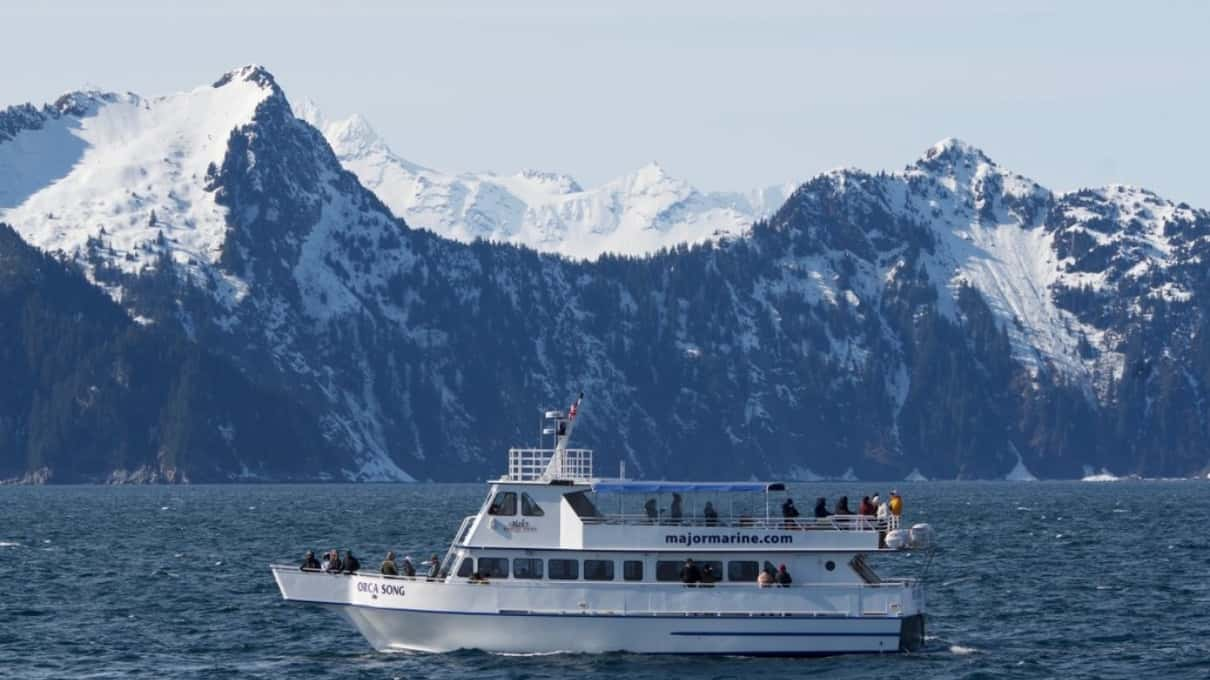
The full-day cruises leave in the morning, and check-in comes before that. Kenai Fjords Tours asks guests on its Northwestern Fjord day, from ~$288, to arrive an hour before departure. Driving down from Anchorage on the same morning makes for a very early start, so many people sleep in Seward the night before; our Anchorage transport guide compares the road and the train.
For July, and for any date with a ship in port, book a few weeks out if you can. The main tours cancel free up to 24 hours before and let you reserve now and pay later, so an early booking costs little. If the month is settled but the route is not, our route-length guide helps you match a cruise to the time you have.