Rough water and seasickness
Resurrection Bay is a long, sheltered inlet, but most park cruises leave it and round the capes into the Gulf of Alaska, where swell rolls in from far offshore. That is where stomachs get tested. This guide sorts the routes from calmest to roughest and quotes the listings' warnings, then turns to what helps before and during the trip.
Where the water gets rough
The bay itself is long and steep-sided, and on most days the water inside it stays fairly flat. The motion starts near the mouth, where the bay meets the Gulf of Alaska. From there the 6-hour and longer cruises run along the outer coast and around headlands such as Aialik Cape before they turn into the fjords. On that stretch the boat meets open-ocean swell, a long, slow roll that some people never notice and others feel within minutes.
Once a boat is inside a fjord the water usually settles again, and the time at a glacier face is a slow drift rather than a run. So the rough part is the crossing, not the whole day. The half day mostly stays in the bay, but it can still be bumpy near the mouth when wind and swell line up.
The routes, from calmest to roughest
- Resurrection Bay half day. Kenai Fjords Tours' half day, from ~$150, spends about 4 hours mostly inside the bay, with Bear Glacier seen from a distance. The least open water of any park cruise, at the cost of a close tidewater glacier;
- The 6-hour cruises. Both leave the bay for one tidewater glacier, so you cross open water twice. Major Marine's version costs from ~$287 and Kenai Fjords Tours' version from ~$230;
- Captain's Choice and the Aialik Bay full day. Captain's Choice, from ~$255, takes 7 hours on the water. Major Marine's full day, from ~$319, takes 7.5. Both spend more time on the coast;
- Northwestern Fjord. The 8-hour day, from ~$288, goes farthest of all, with the most open water.
The captain may change or shorten the plan on any route when the swell is high. That is a call made on the day, and it can turn a glacier day into a bay day. Our route-length guide compares the routes on everything else.
What the listings warn about
Kenai Fjords Tours says plainly on its park cruises that they are not suitable for people prone to seasickness. The line appears on its glacier routes, the longer days included. Major Marine's listings do not carry the same line, but GetYourGuide's summary of reviews for its full day says some travelers wanted clearer warnings about rough seas and how to prepare. Read both as a fair warning that the gulf can be lumpy.
Major Marine sails catamarans, and many passengers find a twin hull feels steadier in a swell than a single one. That is a common impression rather than a promise, and a big sea moves any boat. Our operator comparison covers how the two fleets differ in other ways.
A glacier on the shorter crossing
Major Marine's 6-hour cruise reaches Holgate Glacier on a catamaran, with reserved seats in the heated cabin and a deli lunch, from ~$287. It covers less open water than the full days and still puts you in front of the ice.
Before you board
Most of the work happens before the boat leaves the harbor. Motion-sickness medication works best taken ahead of time. Ask a pharmacist or your doctor which one suits you and when to take it, especially if you take other medicines. Some people swear by ginger candy or capsules. Acupressure wristbands are popular too, though the evidence for them is mixed; they do no harm if you like them. The Wikipedia article on seasickness explains why the inner ear and the eyes disagree on a moving boat.
Eat a light breakfast rather than none at all, and skip the greasy plate. Drink water through the day. Major Marine has a bar with beer and cocktails, and a drink on an empty stomach in a swell is a poor mix. Pack your remedies in a pocket, not a bag left in the cabin; our packing guide has the rest of the list.
On the water
Where you sit makes a difference. The middle of the boat moves least, and a seat low down moves less than one high up, so a spot in the middle of the lower cabin is the calmest place on board. If the cabin feels stuffy, step out onto the back deck for fresh air and fix your eyes on the horizon or a distant shoreline. Put the phone away; reading or scrolling while the boat rolls is one of the quickest ways to feel ill.
If you start to feel sick, tell the crew early. They see it on most rough days and know where to put you. Staying outside in the cold air usually helps more than hiding in a warm corner.
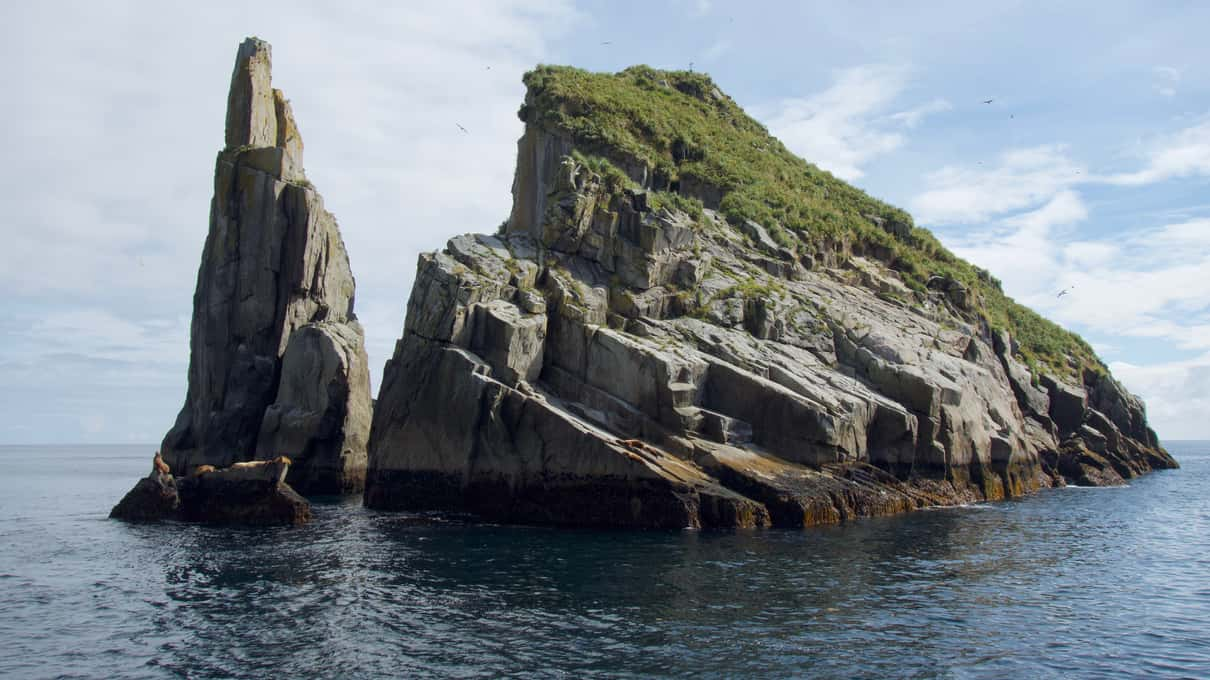
Children and the swell
Kids get seasick too, and they are less good at saying so before it is too late. One reviewer on a Kenai Fjords Tours boat describes a child who was sick on the way out while most of the passengers were fine. Ask a pharmacist about remedies made for children, and keep snacks plain. For younger children the half day is the safer first try. Our family guide covers ages and routes.
Picking a calmer day
Summer usually brings the calmest odds, and September the roughest, as the guide to the best time for a cruise explains. If you have flexible days in Seward, book early in your stay so a weather cancellation or a shortened route leaves room for another try. The free cancellation up to 24 hours before on the main tours helps too.
The spring trip is not a way around the swell. Major Marine's 4-hour spring wildlife cruise, from ~$123, is shorter, but its catch is that it still heads to the edge of the gulf, and it only runs in spring. Glacier lovers with weak stomachs are better off with a 6-hour cruise on a calm summer day, as the tidewater glacier guide shows which route reaches which ice face.